
How Much Does AI 3D Model Generation Cost?
Anywhere from free (open-source, run locally) to $0.10-2.00 per model on cloud platforms, to $50-500+ if you hire a 3D artist. This guide breaks down every option: cloud AI platforms, open-source tools, freelance artists, stock marketplaces, and learning it yourself.
Jan Hammer
3D Artist, Developer & Tech Lead · May 11, 2026
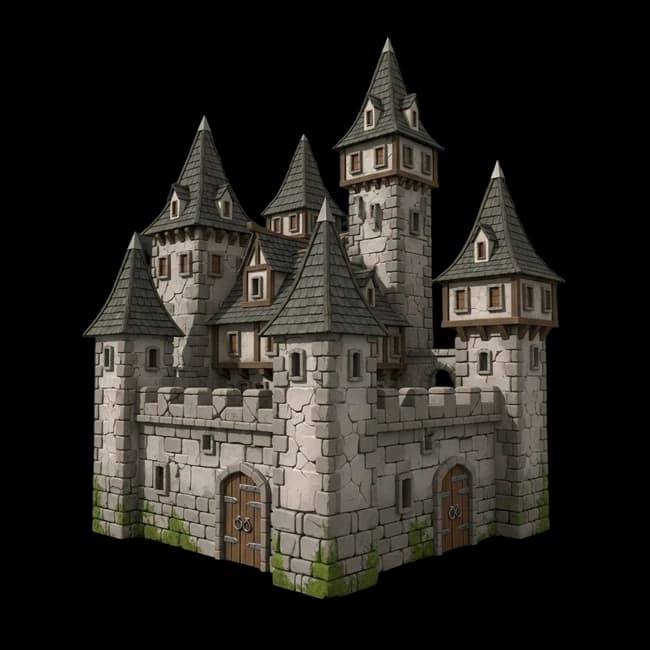
The Short Answer
If you just want a number: most cloud-based AI 3D tools cost between $0.10 and $2.00 per model on a subscription plan. The exact price depends on which platform you use, what plan you're on, and how many credits each generation consumes.
If you have an NVIDIA GPU, you can run open-source models like TripoSR or TRELLIS for free (though you lose the convenience and pipeline tools that cloud platforms offer).
For context: hiring a freelance 3D artist on Fiverr or Upwork typically costs $50-500+ per model. Buying stock 3D models from TurboSquid or Sketchfab runs $5-500+ per asset. Learning Blender and modeling yourself is free in direct cost, but takes months of practice.
AI generation has made 3D accessible at a fraction of the cost, but each approach has tradeoffs. Let's go through them.
Cloud AI Platforms: Pricing Compared
Most AI 3D platforms use a credit-based subscription model. You pay a monthly fee, get a pool of credits, and each generation deducts from that pool. Whether you're using image-to-3D or text-to-3D, the credit cost per generation is typically similar. Here's how the major platforms stack up:
| Platform | Free tier | Paid plans | Per model (approx.) | Standout feature |
|---|---|---|---|---|
| 3D AI Studio | Free credits | $19-149/mo | ~$0.13-0.38 | Multiple AI models, full pipeline (rigging, animation, remeshing) |
| Meshy | 200 credits/mo | $20-60/mo | ~$0.20-0.50 | Good text-to-3D quality, AI texturing |
| Tripo | Limited free | $10-50/mo | ~$0.15-0.40 | Fast generation, good for hard-surface models |
| Rodin (Hyper) | Trial | $10-99/mo | ~$0.30-1.00 | High-detail output, API access |
| Kaedim | No | $99+/mo | ~$3-10 | Human-in-the-loop QA, enterprise focus |
| Local (TripoSR, TRELLIS) | Fully free | $0 (needs GPU) | $0 per model | No cost per model, full control, but limited tooling |
* Pricing approximate and may change. Check each platform for current rates.
A few things stand out from this comparison. Per-model costs are broadly similar across platforms ($0.10-1.00 for most use cases), but what's included varies significantly.
Some platforms only give you basic 3D generation. Others bundle a full production pipeline: rigging, animation, remeshing, texture tools, and multi-format export. That matters because the raw 3D model is often just the first step. If you need to rig a character, clean up topology, or generate LODs for a game engine, paying for separate tools adds up.
Platforms like 3D AI Studio include multiple AI models (so you can try different engines for different objects), plus built-in rigging, animation, remeshing, and texture tools under one subscription. That can replace what would otherwise be 2-3 separate services. Meshy and Tripo are also solid options, especially if you primarily need text-to-3D or image-to-3D without the extra pipeline tools.
Text to 3D generation on a cloud platform. Results in under 2 minutes.
Free and Open-Source Options
If you have an NVIDIA GPU with 8+ GB of VRAM, you can generate 3D models locally for free. The quality has gotten surprisingly good:
- •TripoSR (by Tripo / Stability AI) generates single-image-to-3D in seconds. Good for quick previews and simple objects.
- •TRELLIS (by Microsoft) produces high-quality textured meshes from images. One of the better open-source options right now.
- •InstantMesh offers multi-view reconstruction. Good for objects where you need accuracy from multiple angles.
- •Blender + AI add-ons let you integrate AI generation into a full 3D workflow. Blender itself is free, and the community has built add-ons for AI mesh generation.
The catch with local generation: you get the raw 3D model, but not the pipeline tools. No built-in remeshing, no auto-rigging, no animation, no one-click format conversion. You'll need to handle post-processing yourself in Blender or another 3D tool. For technical users who are comfortable with that, it's a great free option. For everyone else, a cloud platform saves significant time.
AI vs. Freelance Artists vs. Stock Models vs. DIY
AI generation is just one option. Here's an honest look at how all the approaches compare:
Cloud AI Generation
Fast, customizable (your own images/prompts), exports in all formats. Quality is good for most commercial use.
Freelance 3D Artist
Perfect quality, full creative control, optimized topology. Best for hero assets and complex custom work.
Stock 3D Models
What you see is what you get. Pre-made, production-ready. Limited to what exists in the catalog.
Learn It Yourself
2-6 months before decent results. Blender is free. Full control, but massive time investment.
Each approach has its place. The reality is that most professionals now use a mix: AI for bulk props and rapid iteration, artists for hero characters and critical assets, stock models when something pre-made fits perfectly, and manual modeling for edge cases that need full control.
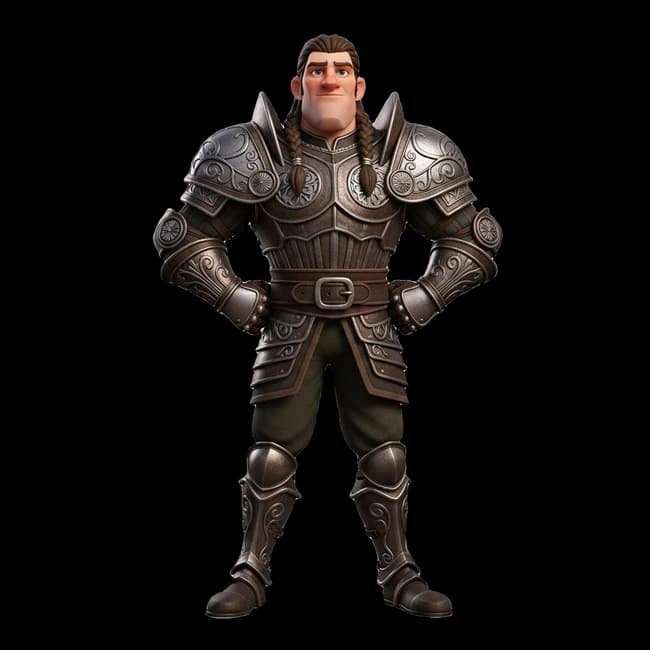
AI-generated character, under $1
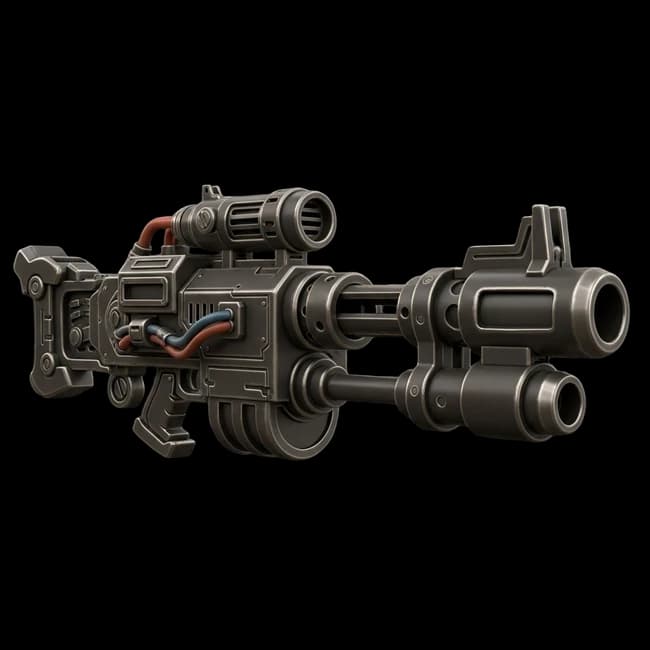
AI-generated weapon prop, under $0.50
What Affects the Per-Model Cost
The "per model" number isn't fixed. Several factors push the real cost up or down:
Platform and plan tier. Higher-tier plans give you more credits at a lower per-credit price. For example, on 3D AI Studio's pricing page, the Basic plan works out to about $0.38 per model, while the Studio plan drops to roughly $0.17 per model (and $0.13 on annual billing). Most platforms follow this pattern.
Generation type. Text-to-3D and image-to-3D typically cost the same (around 20 credits on most platforms). But refinements, rigging, and animation consume additional credits. A fully rigged, animated character might cost 3-4x a basic generation.
Iterations. Not every generation nails it on the first try. Depending on complexity, you might generate 2-4 variants before getting a result you're happy with. Budget for roughly 1.5-2x the raw per-model cost to account for this.
Included tools. On platforms that bundle pipeline tools (remeshing, textures, LODs), those extras are often free. On platforms that don't, you'll either do that work manually in Blender or pay for another service. Factor that into your real cost.
Image to 3D: upload a photo, get a textured model in under 2 minutes
What You Actually Get for the Price
It's easy to focus on the per-model number, but what matters is what you walk away with. Here's what a typical AI-generated model includes on a full-featured platform:
- •Textured 3D mesh with UV-mapped materials, ready for rendering or game engines
- •Multiple export formats including GLB, OBJ, FBX, STL, USDZ, and PLY for use in Blender, Unity, Unreal Engine, Godot, and other 3D software
- •Post-processing tools like remeshing (clean quad topology), texture painting, and LOD generation, often included free
- •Commercial usage rights on paid plans (verify per-platform)
Not all platforms include all of these. Basic platforms give you a mesh and that's it. More complete platforms like 3D AI Studio include the full pipeline, which makes the per-model cost more meaningful since you're getting a production-ready asset, not a raw mesh that needs hours of cleanup. For a deeper look at how platforms compare on quality and features, check out Rodin by Hyper and Meshy as well.
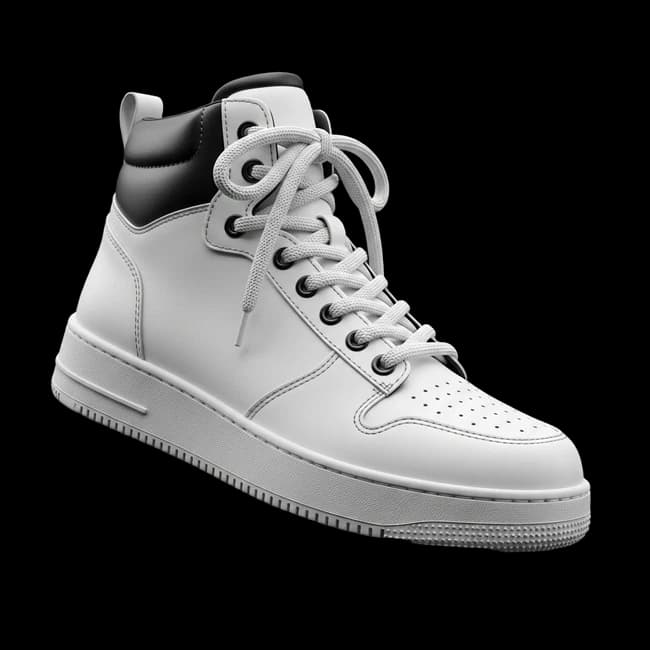
Product viz
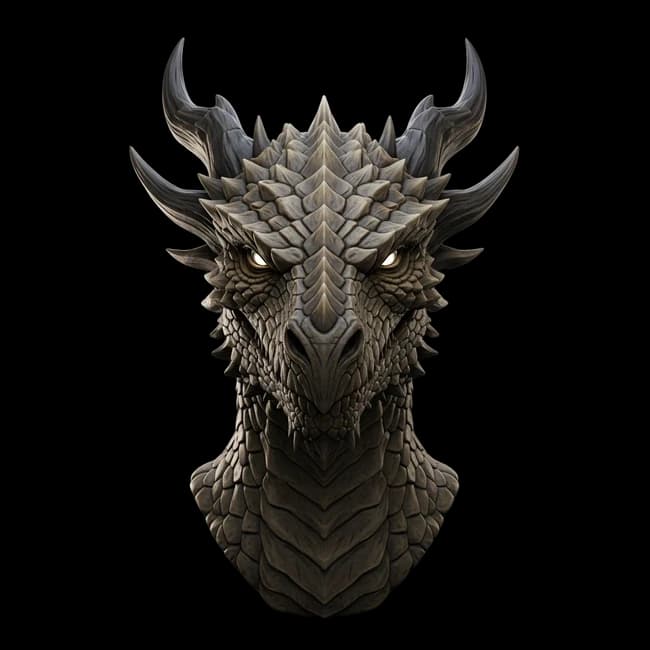
Game asset
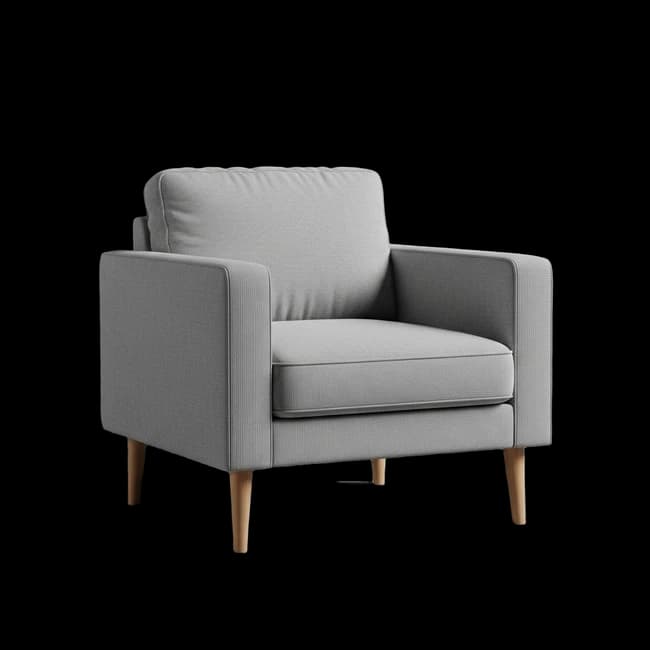
Furniture / archviz
Real-World Cost Scenarios
Abstract per-model costs don't mean much without context. Here's what real projects look like across different approaches:
Indie Game: 80 Environment Props
Rocks, crates, barrels, furniture, weapons, foliage. Standard game dev scenario.
Cloud AI is the clear winner here. A $29/month Studio plan on 3D AI Studio covers all 80 models with credits to spare, plus free remeshing and LODs for game engine optimization.
E-Commerce: 30 Product Models
Shoes, bags, electronics, furniture. Photo-to-3D for interactive product viewers.
Image-to-3D with product photos works well for this. Most platforms handle simple product shapes accurately. The ROI is immediate if 3D viewers increase conversion.
Freelancer / Agency: 200 Mixed Assets
Client project for a game studio, archviz firm, or marketing agency.
The hybrid approach is increasingly popular for agency work. Generate the base with AI, then have an artist refine the 10-20% of hero assets that need to be perfect. Platforms that include rigging and animation (like 3D AI Studio) save additional steps.
Student / Hobbyist: 10 Models for a Project
Class presentation, portfolio piece, or game jam.
For students, free tiers and local options are great starting points. Meshy's free tier or 3D AI Studio's signup credits can cover a small project. Learning Blender is worth it long-term if 3D is part of your career path.
Subscription vs. One-Time vs. Free
Monthly subscriptions make sense if you generate regularly. They offer the lowest per-model cost and usually unlock all features. Annual billing typically saves 25-35%. Most platforms in the $20-50/month range cover moderate usage.
One-time credit packs work for specific projects. You buy a block of credits, use them at your pace, no recurring charge. 3D AI Studio offers packs from $34 (2,000 credits) to $399 (35,000 credits) that never expire. Other platforms have similar options.
Free options (open-source local tools, platform free tiers) are viable if you have technical skills and don't need pipeline tools. They're also the best way to evaluate whether AI 3D quality meets your needs before paying anything.

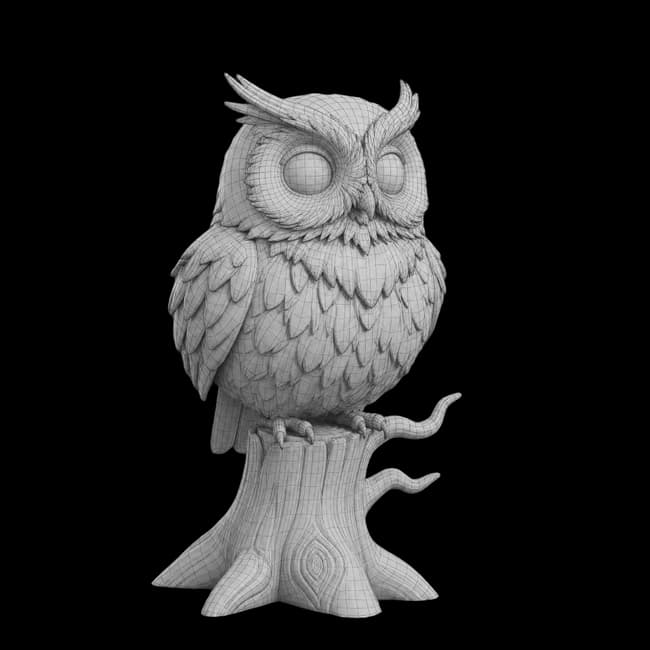
AI-generated owl: rendered output (left) and wireframe after remeshing (right). On platforms with built-in remeshing, cleanup like this is free.
Hidden Costs to Watch For
The per-model number is the headline cost, but here's what else to factor into your budget:
Post-processing time. AI-generated meshes often need light cleanup, especially for game assets. On platforms with built-in remeshing and texture tools, this is handled automatically. On others (or with local tools), expect 5-30 minutes per model in Blender or your 3D software of choice.
Multiple subscriptions. If you're using Meshy for generation, a separate tool for rigging, and something else for textures, costs add up. Platforms that bundle everything (like 3D AI Studio) can be more cost-effective even if the subscription price looks higher, because you're not paying for 3 separate tools.
Learning time. Minimal for cloud platforms (about an hour to learn the workflow), but significant for local tools (setting up Python environments, managing VRAM, troubleshooting CUDA). Factor in your time cost.
Quality iteration. Budget for 1.5-2x the raw per-model cost. Not every generation is perfect on the first attempt, especially with complex or unusual subjects. Good reference images and clear prompts reduce iterations significantly.
When AI isn't enough. Hero characters for AAA games, luxury product renders, mechanically precise CAD models, or highly stylized art direction still benefit from artist involvement. The hybrid approach (AI for the base model, artist for refinement) is often the most cost-effective solution for high-end work.
How to Choose the Right Option
Here's a quick framework based on your situation:
Need bulk assets fast, moderate budget: Cloud AI platform with a subscription. Best value per model, fastest turnaround. Platforms with bundled tools ( 3D AI Studio, Meshy) save the most time.
No budget, have a GPU: Start with TripoSR or TRELLIS locally. You'll need to handle post-processing yourself, but the generation cost is zero.
Need perfect quality on a few assets: Hire an artist, or use the hybrid approach (AI base + artist refinement). More expensive per model, but quality where it counts.
Need something specific that already exists: Check stock marketplaces first. TurboSquid, Sketchfab, and CGTrader have millions of pre-made models. Often faster and cheaper than any generation if the exact asset you need is already there.
Want to learn and have time: Learn Blender. It's free, incredibly powerful, and a valuable career skill. Use AI to fill gaps while you're learning.
The Bottom Line
AI 3D model generation costs between $0.10 and $2.00 per model on cloud platforms, or is completely free if you run open-source models locally. Compared to $50-500+ per model from freelance artists, $5-500+ per model from stock marketplaces, or months of learning to model yourself, AI has made 3D dramatically more accessible.
The best value comes from platforms that bundle generation with pipeline tools (remeshing, rigging, textures, animation) so you're not paying for separate services. For most projects, 3D AI Studio offers the most complete package: multiple AI models to choose from, all pipeline tools included, and per-model costs as low as $0.13 on annual plans. But Meshy, Tripo, and open-source tools are all legitimate options depending on your needs and budget.
The smartest approach is to try a few platforms using their free tiers or trial credits, evaluate the output quality for your specific use case, and then commit to the one that fits your workflow best.
Frequently Asked Questions
How much does it cost to generate a 3D model with AI?
Between $0.10 and $2.00 per model depending on the platform and plan. Cloud-based services like 3D AI Studio, Meshy, and Tripo range from $0.13 to $0.50 per model on subscription plans. Running open-source models locally (like TripoSR or TRELLIS) is free after hardware costs, but requires a capable GPU.
Are there free AI 3D generation tools?
Yes. Several open-source models like TripoSR, InstantMesh, and TRELLIS can run locally for free if you have a compatible GPU. Cloud platforms like Meshy and Tripo also offer limited free tiers. 3D AI Studio gives new users free credits to test the platform before subscribing.
What's included in the price besides 3D generation?
It varies by platform. Some only offer basic 3D generation. Others include a full pipeline. For example, 3D AI Studio includes Text to 3D, Image to 3D, AI Rigging, AI Animation, Image Studio, plus free Remeshing, Texture AI, and LOD Generation. Exports come in GLB, OBJ, FBX, STL, USDZ, and PLY.
Is AI 3D generation cheaper than hiring a 3D artist?
Significantly. Freelance 3D artists on platforms like Fiverr or Upwork charge $50-500+ per model depending on complexity. AI generation costs $0.10-2.00 per model. The tradeoff is that artists offer more precise creative control and can handle complex briefs that AI might not interpret well.
Can I use AI-generated 3D models commercially?
On most platforms, yes. 3D AI Studio, Meshy, and Tripo all grant commercial usage rights on paid plans. Always check the specific terms of the platform you use. Open-source models generally have permissive licenses, but verify before shipping.
Should I use a cloud platform or run AI 3D generation locally?
Cloud platforms are easier to start with, require no GPU, and offer a full toolchain (remeshing, rigging, textures). Local generation is free but needs an NVIDIA GPU with 8+ GB VRAM, technical setup, and offers fewer post-processing tools. Most people start with cloud and explore local options later if they need volume.
How does AI 3D compare to buying stock 3D models?
Stock marketplaces like TurboSquid or Sketchfab charge $5-500+ per model, but you get exactly what you see. AI lets you generate custom models matching your specific needs for under $1 each. Stock is better when you need proven, production-ready assets. AI is better when you need custom objects at scale.
Jan's Take
Real experience
"I've tested every platform mentioned here. The honest truth: per-model cost is almost identical across tools. What actually differs is how much time you spend after generation. Platforms that include remeshing, rigging, and texturing save hours per project. That's where the real cost savings are."
Jan Hammer
3D Artist, Developer & Tech Lead
Jan is a freelance 3D Artist and Developer with extensive experience in high-end animation, modeling, and simulations. He has worked with industry leaders like Accenture Song and Mackevision, contributing to major productions including Stranger Things.